Thursday, 3 November 2011

Character spotlight on Flannery McNeill & Jamie O'Connor


Kaye Dacus introduces Flannery and Jamie from her final story in her Matchmakers series, Turnabout's Fair Play.

Over to you, Kaye:~


Brief physical description

Flannery McNeill has the looks and figure most women would envy—tall, blonde, and athletic. Although not a classic beauty, she has a cute sweetness that helps her make easy friends and attract all kinds of men. Of course, she’s not sure she likes that!

When Jamie O’Connor enters a room, he turns the head of every woman in the room. Though he’s a few inches under average height, his dark hair, gray eyes, and slow, sensual smile make him the subject of many women’s daydreams.

Actor/famous person

Like the other three female leads in The Matchmakers Series, the template that inspired Flannery’s physical description is a model I found on JupiterImages.com—which also happens to be the model the publisher used on the front cover!

Though I wrote a synopsis (a short one) for the series proposal more than a year before I started writing the book, I didn’t have a clear picture of Jamie in my head when it came time to actually start writing. Until I realized I had a TV obsession who would work perfectly—Alex O’Loughlin!

Strengths and weaknesses


Flannery is a confident, independent woman—a little too confident and independent for her own good, sometimes. She also has hangups about good-looking men, and a fear that her best friends’ marriages are going to ruin her friendships with them. But She also can admit when she’s wrong, and she goes out of her way to help others.

Jamie is popular and successful, well-known and a leader in his industry. At least, that’s how he appears to the outside world. Inside, he’s still the dorky thirteen-year-old who stutters and can’t talk to women. And when the façade of the successful businessman is stripped away . . . well, I can’t say too much, because then there’d be no reason to read the book!

Quirk (if any)

Flannery DOES NOT cook. In fact, though she has a high-end kitchen in her three-year-old downtown condo, she’s never even used her oven. She’s also very proud of her Irish heritage—but whatever, you do, don’t mention her namesake, author Flannery O’Connor! She absolutely hates that.

When Jamie is upset, if he’s sitting at a table, he presses his face down against it. This got him in trouble in junior high school when he did this in the school cafeteria and his forehead stuck to a sticky patch on the table. He’s also an avid fan-fiction reader.

Your inspiration for the characters

I sent in the proposal for The Matchmakers Series in June 2009. The series was built with two strong story ideas I’d already been working on for a while (Love Remains and The Art of Romance). But I needed a third story idea. I knew the heroine would be the third of the best friends. Because I was an editor who’d been laid off from my job less than a year before, I decided Flannery would be an editor. Since I worked in advertising/marketing for 13+ years before entering the publishing industry, I decided to make Jamie a Sports Marketing account executive at a large advertising agency.

Background to the story

Aside from being a romance, Turnabout’s Fair Play is a story about identity—finding or rediscovering who someone was created by God to be. And because one can only do that through loss and crisis, there’s plenty of both in the story. But there’s also plenty of humor and plenty of romance!

My image set on Flickr for this book: click here

Thanks for visiting again, Kaye :)

Relz Reviewz Extras
Character spotlight on Zarah & Bobby from Love Remains
Character spotlight on Caylor & Dylan from The Art of Romance
Review of Stand-In Groom
Visit Kaye's website
Buy Kaye's books at Amazon or Koorong

Wednesday, 2 November 2011

Interview with Ronie Kendig

I'm super excited about the pending release of Firethorn, the final story in Ronie Kendig's Discarded Heroes series, which hits shelves January 1st.  Ronie and I are cooking up some fun posts and giveaways to celebrate the release of Firethorn so stay tuned.  For now enjoy this interview with Ronie from Barbour's press release and preorder this fabulous book!


Here's a peek at part of my endorsement of Firethorn:

"Kazi and Griffin are complex characters, formidable as individuals and dynamite as they learn to work together seeking answers, justice and just a little retribution.  Prepare to be energised, impassioned and engaged, heart and mind, by this stellar tale of betrayal, forgiveness, sacrifice and hope." ~ Rel Mollet

But don't just take my word for it!  Check out the following endorsements from some great authors:

“Roller coaster. It’s the perfect word to describe the twists, the turns, and the rush of exhilaration that came from reading Firethorn. Once again, Ronie Kendig delivers a novel that is wildly entertaining and at the same time deeply affects your heart.”
— James L. Rubart, bestselling author of Rooms, Book of Days and The Chair

“Firethorn has many moving parts that synchronize together with the beautiful precision of an expensive Rolex watch!”
— Don Brown, author of Navy Justice Series

“Firethorn is a book that races forward on multiple fronts with the trademark action and romance that Ronie Kendig excels at. The action moves so fast with the characters I love that I couldn’t put the book down, and it left me longing for just a little more.”
— Cara Putman, author of Stars in the Night and A Wedding Transpires on Mackinac Island

“Readers will fall in love with these tough-as-nails characters in this action-packed adventure. Firethorn is fast paced with unexpected twists and turns. A joy to read.”
— Margaret Daley, award-winning author of 75 novels


Meet The Author:

Ronie Kendig grew up an Army brat, married a veteran, and they now have four children and a golden retriever. She has a BS in Psychology, speaks to various groups, volunteers with the American Christian Fiction Writers (ACFW), and mentors new writers. Ronie can be found at www.roniekendig.com.


Author Q & A

Q: Firethorn deals with the issue of denial. Throughout the book, Griffin rarely deals with the issues from his past. What advice do you have for readers who, like Griffin, push their feelings aside instead of dealing with them?

A: I am a classic “stuffer”; shoving down the bad and not wanting to deal with it. The thing is, this type of survival actually becomes counterproductive because what’s down there, what’s simmering below the surface, are all the things that have been “stuffed.” The Bible promises the truth will be brought into the light, and I believe that applies to our hurts, aches, and pains. It’s better to deal with them head-on than to let them fester and boil, though at the time, it does not seem so.

Q: All of the books in the Discarded Heroes series take readers to a different part of the globe. Did you visit each location yourself or were you able to conduct research to keep the series accurate?

A: I wish I had visited them all! But today’s technology enables me to “visit” them via friends who have been there, experts who’ve studied/lived in these locations, and then there’s good ol’ Google Maps that allows me to visibly see the terrain via their satellite images. There is so much information at our fingertips these days, but I confess I would absolutely LOVE to have that firsthand, experiential knowledge over the secondhand knowledge.

Q: Firethorn is the conclusion of the Discarded Heroes series. Now that you have to say good-bye to the members of Nightshade, who would you say was your favorite?

A: Honestly? I don’t have a favorite because they’re ALL favorites—they’re my published “children,” and there is something unique and awesome about each one. Max took me on a wild, turbulent ride, but I love his tenacity and penchant for directness. Colton—well, I don’t think I need to say much more than he’s the consummate cowboy with all the charm, good looks, and common sense known to exist in his breed of man. Quiet Canyon wormed his way into my heart with his loyalty and his dedication to the mission, but I could really relate to the raw brokenness that lurked beneath his “perfect” surface. Griffin was the grizzly who is as much a teddy bear as he is a grizzly. Rock-solid tenacity rounded out the Kid’s speak first, think later flaw. Dighton and Azzan, who joined the team in the middle, turned out to be incredible men with intriguing stories and character.

Q: This novel also tackles discrimination and prejudice, which are both difficult subjects. What advice would you give a reader who is dealing with one or both of these issues?

A: Growing up in a military community, I was surrounded by diversity. So when a dear friend of mine moved away to Georgia and called me one day with a story of how a convenience store clerk wouldn’t take money from her hand because my friend was African American, I was truly stupefied.

Prejudice and discrimination still exist in our world, and it absolutely breaks my heart. I kept the thread on this light because it’s not the focus, but I did want to pull back the veil, so to speak, on this topic. I had others “warn” me that I would get “attacked” for being a “white girl writing about a black man.” Some even suggested I write about a different character for the last book, but to me, if I had done that, it would be discrimination. Griffin is the backbone of Nightshade. He needed his story told, and I have no regrets.

If I made mistakes in portraying the African American community, I apologize, but I couldn’t not tell his story simply because he was a different color. But just as I have an African American in my stories, I have Caucasians, I have British, Russians, Swiss, Middle Eastern, Jewish, Irish. . .I love culture, and readers will consistently see that diversity in any Ronie Kendig novel they read. It’s what makes our world exciting and beautiful!

Q: Ultimately, what do you hope your readers take away from Nightshade and the Discarded Heroes series?

A: Admittedly, it’s sad to realize this is the final book in the series. Readers have responded very positively, and I think the original mission of the Discarded Heroes—to open dialogue about our troops, about what they do/see/experience and how that affects them, their lives, and their families—has succeeded. It is my hope that readers will be more aware, and ultimately, more supportive of our military heroes, both active duty and veteran.


Relz Reviewz Extras
Reviews of Wolfsbane, Digitalis and Nightshade
Meet the team: Max ~ Colton ~ Canyon ~ Griffin ~ Azzan ~ John 
~ Marshall
Meet the women: Sydney ~ Piper ~ Dani ~ Kazi

Character spotlights: Max & Syd ~ Colton & Piper  ~ Canyon & Dani
Visit Ronie's website and blog
Visit Ronie's Discarded Heroes website
Buy Ronie's books at Amazon or Koorong

Tuesday, 1 November 2011

Attracted to Fire by DiAnn Mills

Synopsis:~

Special Agent Meghan Connors' dream of one day protecting the president of the United States is about to come true. Only one assignment stands in her way. After the vice president's rebellious daughter is threatened, Meghan is assigned to her protective detail on a secluded ranch in West Texas. Unfortunately, working with Special Agent in Charge Ash Zinders may be as tough as controlling her charge. Ash has a reputation for being critical and exacting, and he's also after the same promotion as Meghan. But when the threats escalate and security on the ranch is breached, it becomes clear this isn't the work of a single suspect-it's part of a sophisticated plan that reaches deeper and higher than anyone imagined. And only Ash and Meghan can put the pieces together before it's too late.

My take:~

In the dusty and remote setting of a swanky West Texas ranch, DiAnn Mills creates a story of two dedicated and fiercely independent Special Agents, out to prove themselves in order to be the first to a coveted promotion.  Unprepared for an emotional connection with each other, they scramble to deny their feelings and focus on their protectee, the wild and defiant presidential daughter.  It took me a little while to engage in this story but the second half had me invested in the outcome.  The tension and dislike between Ash and Meghan was palpable, and believable given their natures and goals in life, and it was fun to see those feelings soften into attraction during the story.  I also enjoyed the journey Lindsay takes from an over indulged and self destructive child to a woman determined to not let set backs take her down.  The antagonist became clear to me early on in the story but there are numerous twists that made me wonder about others' involvement.  Be aware DiAnn's novels are character driven rather that laden with action so Attracted to Fire will appeal to readers who like their suspense at a slower pace.  With solid spiritual themes, DiAnn continues to provide fans with good quality romantic suspense with enjoyable characters.

With thanks to Tyndale House for my review copy via NetGalley
Relz Reviewz Extras
Character spotlight on Bella & Carr
Reviews of Sworn to Protect and Breach of Trust
Interview with DiAnn
Visit DiAnn's website
Buy DiAnn's books at Amazon and Koorong

Saturday, 29 October 2011

RBC Book Club Interview with Pamela Binnings Ewen


Our October selection, Pamela Binnings Ewen's heartbreaking and hope filled tale, Dancing on Glass, made for an excellent discussion and time of reflection.  Pamela generously shared of her time, answering our varied questions below.


Pamela's story delves into the difficult topics of spousal abuse and codependency against the backdrop of 1970's New Orleans and a young woman forging a legal career yet finding herself lost in a marriage that should have never been.

**Please note spoilers below**


 Pamela:~ Hello everyone! I really enjoyed your questions. I’ve combined them where they were similar. Hope that works! Put on your reading glasses—Here goes! 

S and J: You’ve asked what my motivation was for writing this story. 

I've thought about writing it for years. Several ideas coalesced in my mind around the same time a few years ago and I knew it was the right time. One point had to do with my previous book, The Moon in the Mango Tree, and the role women played in the world at that time, the1920's. That was the story of my grandmother's life—I was close to her, loved her dearly. She was a suffragette and a wonderful singer. In 1918 she married my grandfather, a medical doctor, and immediately he went off to war—WWI. While he was on the battlefields in France, she continued studying music. One day she was given the opportunity to begin a career with the Chicago Opera. She was thrilled. Couldn't wait for my grandfather to return to discuss this—he could practice medicine in Chicago. She could sing. When he returned from the war however, he was a changed man. He'd seen such misery on the battlefields that he couldn't see returning to life as a society doctor in Philadelphia. He told her that he was accepting a position as a medical missionary in Siam (now Thailand) and expected her to be thrilled. 

Now. In the United States women finally won the right to vote in 1920. The door of opportunity opened enough to let in a sliver of light. But the idea of a woman having a career on stage was still new and very controversial in my grandmother's world. My grandmother was devastated, but she felt she had no choice other than to accept her husband's decision. As her mother advised, the husband is the one with a career. Her job as his wife was to create a home for him in the mission. And she loved him, of course. So, instead of singing on the stage, she found herself in the jungles of north Siam as a missionary wife. Throughout that dazzling decade—the jazz age—but the longing to sing never left her. Through the years she wondered what life would have been if she'd chosen to continue singing. In the end, she was faced with a choice between two things she loves, and that's the essence of the story.

That choice. Because at least, and at last, the choice was hers to make. 

This is a long way of getting to your answer, but notice that Dancing on Glass is set in 1974, about half-way between my grandmother's time and today. Amalise has chosen a career in law. She has opportunities my grandmother never had, but still she's chosen to work in what was then a man's world. That's also close to the time when I was going to law school, and then practicing law. So the timing of the story isn't coincidental. I thought it would be interesting to compare and contrast the issues that my grandmother faced in the  1920's, and some of my own in the 1970's; not only the woman's role in the world and how society views that, but also in their relationships with men. 
      
And that brings me to the second reason for writing the story. Over the years we women have come to a point where we can really reach for the stars. Whether that means working inside the home or outside, today we have a strong support network to make our choices, unlike my grandmother's time. Women in your country and mine are now accomplished, educated, strong, and often financially independent. And yet still we find some of these same strong women seemingly trapped in abusive relationships.  I've known some. I've also experienced some aspects of Amalise's relationship with Phillip. We read about in the headlines all the time. Often it's a secret until something outside our control lets it out. Media love to ask the question when they find out: Why did she stand by her man? 
      
This is an important question. I believe there are many more women in Amalise's predicament than we know, women living two lives...compartmentalizing. Keeping secrets. But understanding is the key. Knowledge is power, and the key to prevention. The standard answers to the question—low self-esteem, unhappy childhoods, etc., don't stand up when you look at these relationships today. However, although we've become stronger over the years, we've also retained our softer sides, our nurturing instincts.  I think of this as the double-bind.  And in the case of predatory relationships, perhaps that's the lure.

What do you think about that? 

For R and J too: Faith on Trial led me to Christianity. I think of that book as my own faith journey. Here’s what happened. I was raised in a Christian home, but as a young adult I began questioning some of the fundamental principles of Christian faith, the dark questions that some of us are faced with in the night. Is it really true? This was the nineteen sixties. There were many strong and rational writers at that time arguing in books and media and universities and songs that this life is all there is—you'd better make the most of it. 

These writers and philosophers made compelling arguments against religion. So I went to my pastor and asked the question: How do you know the Gospel stories are true? I asked the question that way, because Matthew, Mark, Luke, and John are the witnesses to the resurrection of Jesus Christ, the keystone for Christianity. But the answer I got was this: There's no way to prove it. You just have to have faith. 
      
My mind could not accept that answer no matter how much I wanted to believe. (Perhaps that trait is what made me a lawyer!) At any rate, as I said in Faith On Trial, unfortunately, you cannot just make yourself believe. My heart wouldn't accept what my mind rejected. So I walked away in the sixties an agnostic and I got on that treadmill and started to run. Went to law school. Became a lawyer. And for the next fifteen or so years, I was agnostic, although always, always…I wanted to believe. After many years of searching for answers, one day it occurred to me that lawyers examine the validity of past events all the time, proving whether or not they really occurred. We do that by examining the credibility of the evidence and witnesses. Balancing things, coming to conclusions based upon this standard: After looking at all the evidence, is the event more likely than not to be true. This is called a “reasonableness” standard.  
      
So I put the Gospels of Matthew, Mark, Luke and John on trial. It took almost 15 years to research the evidence and put it together, using the most original sources that I could find. Piece by piece I strung the evidence I found into a chain of proof, as you would in a trial. And as I did this, I began to realize that the actual evidence I was finding–archeological, scientific, medical, forensic, historical contemporaneous writings, studies in linguistics, papyrology, history—all, combined, provided an extremely powerful case. A case that would clearly hold up in court. By the time I’d finished researching and writing Faith on Trial, I was a committed Christian. This changed my life. Soon after I resigned my partnership at my firm to write, because I had ideas that I longed to discuss with readers like you!! 
      
Here's a strange thing though. While researching my Grandmother's story for Mango Tree, I came across her letters home, and her family's letters to her throughout the 1920's. In the letters I discovered that my grandmother had had the same questions about faith that I'd had. She came to Christianity by a different route, but the similarity was very strange. 

A – Did I answer the first part of your question about how I conceived the story? It was really just a step from there to the process of developing the actual story itself because most writers write what they know. So Amalise became a lawyer, and the setting was New Orleans, because that's my home. New Orleans is a magical city and I thought of it almost as another character in the story. 
      
Creative Commons
The actual process of writing, for me, is really fun. I start with a stream-of-consciousness draft that NOBODY ever sees. I don't worry about sentence structure or character arcs or anything at this point. Just get the story and people down on paper. After that, I begin what I think of as the real craft that is, shaping the story. That involves creating chapters, getting inside the characters, doing lots of research. For example, the mid-nineteen-seventies were one of my favorite periods of time in New Orleans. But I still had to go into old newspapers to recall exactly what was going on in the news, what movies were popular, what songs, etc. 
      
But once I get to this stage, I'm creating a world in my mind. When I write, it's as if I've shifted into this other world. I put myself in the character's place when I'm writing, as if I've become that person, and the story takes over. Rewriting is amazing, and with each rewrite of the book I find something new that strikes me as critical to the character's choices, or go deeper into the psychology of relationships. 
      
You are perceptive. And C – this is also for your last question. Getting inside a character, and his or her point of view, can be very emotional. For example, when I was writing Mango Tree, I'd put Liebestraum on 'replay' for hours and just get lost in that world and the emotions. That was particularly true because I loved my grandmother so, and yet she was a very complex person and I knew that I had to show her flaws as well as the wonderful parts. So it is emotional, but also exhilarating because you feel that you are creating something that will last, and something that will touch the lives of many other people.  
      
With Amalise and Phillip, some of the situations did come from my own experience and so yes, it was sometimes difficult to write. Not always, because I hope that readers find the happy side of Amalise as well. And I think the city of New Orleans adds some whimsy to lighten things up a bit. Still, some parts of the book were hard going. Not only because I'd been there to some extent, but also because I knew that many other women reading this book would see themselves, and as I was writing my prayer was to get things right. To be able to tell someone else's story to a reader who'd thought she was alone. And to warn the ones who recognize themselves but haven't been completely lured into the trap just yet.  Here's the thing I mentioned earlier about 'secrets'. When you are in an abusive relationship, whether it's emotional or physical, keeping this a secret is often a top priority. Amalise doesn't want to put the burden on her parents, doesn't want to hurt them. She also doesn't want them to jump into things and force choices on her. She wants to make decisions herself, from her own perspective. Also, at one point she reflects that if anyone at the firm knew what a mess her home life was, they'd have less respect for her. That need to keep one side her life a secret forces her to compartmentalize, to focus on one thing at a time and force the other problems away until their turn comes along. Which means in a way that she lives in the moment. Remember? She picks her battles. 
      
How did I deal with this emotional situation? Well, I do tend to compartmentalize. And I’ve left those years behind. I'm now married to a wonderful man, my oldest, best friend. (Sound familiar?) 
      
Prayers in italics: I generally like to distinguish the character's 'specific' thoughts (as opposed to general reflection) and one way to do that it to use italics. Amalise's faith is so personal to her that often her specific thoughts are informal dialogue with her Abba, which sometimes also take the form of prayer. As to Amalise's mother's prayers, my original thought was to put all of Mama's those in italics but the publisher thought that was too much. 
      
Why did I set the story in 1974/75? R, this is for you, too. As I mentioned above, one reason was to show the changes in women’s' lives from the time of my grandmother, and also because that was about the time I was in law school. But in addition, I thought it would be fun to strip away the years and show readers what New Orleans circa 1970's was like. The city was smaller, much like a small town. And much less self-aware. There was less glitz then. Physically, also, it was different, particularly in the areas visitors see around the French Quarter. 
      
C - Regarding the 'observer'. The philosopher Descartes described the way we all watch ourselves internally. Have you ever found yourself doing that—a sort of running internal commentary on your actions or decisions or what's going on around you? (Giving yourself a mental high-five, for example?) With me, sometimes that inner voice is my conscience. Other times thoughts pop into my head from nowhere, it seems. And sometimes I think maybe it's God's way of communicating with us—the counselor, or Holy Spirit. The observer is that little voice inside that monitors what we're thinking and doing, and sometimes lifts the veil so that we can see more clearly. 
      
Stock.xchng
Yes, as I mentioned above, I have been involved in such a manipulative relationship and it took a long time for me to understand what had happened. Again, R, this answer is for you, too. I think something new is happening in relationships between men and women as a result of that double bind I mentioned earlier, and it's due to our nurturing, maternal instincts, and it's this. Many women today are able to leave a relationship like this. Many are financially independent. Many are strong, self-confident, and educated. So the real question here is why don't women like Amalise caught in predatory, abusive relationships like this leave? Dancing on Glass is not autobiographical, but some of the events are taken from my personal experience, and some of it comes from observing others, and some from extensive reading and research. Television, magazines, newspapers are all full of these stories. In the U.S. Elizabeth Edwards, deceased wife of presidential candidate John Edwards comes to mind. Reporters everywhere asked “Why did she stand by her man?” Dancing on Glass is my attempt to answer that question in a modern way. I hope that readers will find something new in the way they analyze and understand these relationships after reading the book. 
      
As I said above, writing this story was definitely sometimes stressful. It's also sometimes frustrating to read, I know, because as a reader, you had a bird's eye view and wanted to warn her. As the writer, I wanted to do the same, but there’d have been no story if (1) I'd wised her up and she’d walked away from Phillip at the first warning sign, or (2) if you, the reader, weren’t alert to the possibilities and consequences of her flawed choices as you read along.    
      
But, at the end? Hmm… if I were Amalise, I don't know if I'd have handed Phillip the branch. (How about you?)  
      
J – I was at a dinner party one night and a woman at our table talked about her grandmother, named Amalise. Her grandmother was from Louisiana, of French and Creole origin. I thought the name was beautiful and conscripted it! Amalise’s last name, Catoir, was the name of a wonderful friend of mine who passed away recently of an aggressive cancer at the age of 30. Anna Marie Catoir gave me consent to use her last name. She was a little flash of sunshine and readers might think this is strange, given the nature of this story, but I think of Amalise that way, as optimistic, faithful, trusting. As to the use of the name Ama in the prologue being confusing, I hadn't thought of that before. But I can see how that might be so.  
      
When is enough, enough? I find that out in rewrites and have to try to discipline myself. As a writer I want to create a world for my readers, though, so there is a fine line to draw. Editors also help with that. They're ruthless with that red pen! 
      
I can't speak for other publishers, but B&H Publishing Group hasn't set out any censorship rules for me. They are looking for a story that clearly differentiates between good and evil, however, and more specifically that has a Christian view of what that means. I've also found that they've been willing to listen when I'm making a point in a way that might be viewed as traditionally somewhat edgy, so long as that differentiation comes out in the actions of the characters and their inner reflection.  In Dancing on Glass, Amalise makes some bad choices, but her faith is steadfast. God is always there to pick her up. To give her another chance. To guide her one way or another to the right path. And to help her when she suffers those consequences. My own view is that this is the nature of God's grace, and this is one of the points of the book. No matter what, you are never alone. Remember the parable of the 99 sheep safe in the fold, and the question—which one of you would not leave them to go find the one that is lost. 
      
I do think these views differ among publishers, however. But I've been with B&H since I began writing with my first book, Faith on Trial, released in 1999, and so can't make a valid comparison with others. I think if you look at the books published by any house, you can get a pretty good view of how they view this question. 

bigsampson
J – How do you spot a person like Phillip? Very good question and you're correct that this is difficult because he can be charming, sociable—he's a chameleon. He creates a mirror for our own wants and needs. That's what makes him so frightening. These types of people are adept at appearing to function normally, indeed very successfully sometimes, in society. The point is that predators can be very difficult to spot. 
      
Phillip Sharp is based primarily on a diagnosis of borderline personality disorder in an out-of-control situation where no recognition or help is involved. In the note to readers in the back I recommended a book titled “I Hate You—Don't Leave Me” for those who want to learn more. (Kind of says it all, doesn't it?) The beginning of Amalise and Phillip's relationship was quite intense...too intense, it moved too quickly and that's one warning sign. Emotional blackmail is another. My hope, and prayer, is that readers come to a new understanding of relationships like this and overcome the desire for secrecy to seek help. This is not the usual analysis of abusive relationships—this is not the Burning Bed. (Remember that movie?) In a relationship like this between Phillip and Amalise, it's futile to think you can fix the problem on your own. For readers involved in such relationships, understanding what's happening and that you are not the only one caught like this is critical. Please seek help. 

R – How did I research Phillip’s insidious psychological effect on Amalise? As I mentioned above, some of my knowledge comes from personal experience. I also worked with several psychiatrists who specialize in this personality disorder to help me understand. And lots of reading to fill in the blanks. 

T – Yes The Moon in the Mango Tree is very different from Dancing on Glass, but I had no trouble with the transition. Basically they are alike in this way: they both deal with women who are faced with difficult choices that many of us must make during a lifetime. They’re both (in a general way) optimistic about life. In the case of my grandmother in Mango Tree, she was on a faith journey. In the case of Amalise, her faith was well grounded, and even when she took the wrong path, she blamed herself, not God. So faith plays a large part in both books. In Mango Tree it’s more subtle.  
But you’re right, they’re also very different. This drives my publisher crazy since readers come to expect certain consistencies among the books of a writer they like. Secret of the Shroud is different, too.  Dancing on Glass is the first time I’ve written a series, using the same characters and location and extending the story through three books. Chasing the Wind, the sequel to Dancing, will be released next year, August 1, 2012. But even though it continues the saga of Amalise and Jude, it’s still a very different story. (I just get carried away, I guess.) 

T - you asked if I needed to take breaks from writing a character such as Phillip. Yes, yes, and yes!  
How did writing this story impact me personally, and my faith? As I mentioned above, it was very personal to me. Perhaps the book was a catharsis of sorts, a way of understanding. But the character of Phillip didn’t stick around afterwards. As you may know, by the time Dancing on Glass was released, I’d written and turned in the second book, the sequel, which was a lot of fun to write. So, in a way, Phillip is truly gone. 

As to faith—one of the wonderful things about Christianity is God’s grace. Knowing that He understands our weaknesses and flaws, and will forgive and help us up each time we fall, no matter how many times that happens He is always there: That is the gift of faith. 

My favorite way to de-stress is to read. I have a great office where I write, upstairs overlooking a small lake that flows into a beautiful swamp. (In fact that swamp and the great white herons were my muses for the last few scenes in Dancing!) But I have to get away to relax. So I go down the street to a local coffee shop that has a pretty covered patio and I sit out there and read for a while. It’s my ‘time-out’. I also exercise on the treadmill every day, but I read while I’m doing that too.  

A writer’s life is almost the inverse of a lawyers’ life, and I love each one. I feel so blessed to have been given the chance to have two absolutely wonderful careers. During my 25 years as a lawyer I learned so much and met so many great people. I can truly say that I loved that time. Same with writing – I love the creative process itself. It’s like magic—you have a thought, or a question, and you noodle on it for a while. Then you begin researching the question to find out more about it. Finally you sit down (very important!). And begin writing, and then rewriting, rewriting, rewriting…shaping it into something that you hope will survive and get to readers. And best of all, getting to know readers like all of you!! 

Sounds like Pollyanna, I suppose. But I enjoy life. 

Re my bio: I live in Mandeville, Louisiana, which is exactly 23 miles north of New Orleans across Lake Ponchartrain, over the causeway. This area is locally referred to as the Northshore, and it’s in the Greater N.O. Metro Area. Lots of trees and rivers and lakes over here. About 10 degrees cooler. Things are slower, but we have a thriving literary community too. This is Walker Percy country. 
But I think of New Orleans as home. It’s a city that gets into your blood. My favorite part of the city…hmmm. Well, I have to choose two because I love them both, and have wonderful memories over the years in them. First: the French Quarter. I loved stripping away the years in Dancing, going back to the Quarter the way it was when I was a young mother raising my son. I’d take him on the streetcar down to Jackson Square and he’d chase the pigeons there. We’d stop at Café du Monde for beignets, and walk through the narrow streets. Spend the whole afternoon there. Some scenes in Chasing the Wind (next summer) come from many of those memories. Also, there’s such an eclectic literary community in the Quarter. For instance some friends of mine life on Pirate’s Alley in the heart of the French Quarter in a house that William Faulkner owned and wrote in.  
Tulane: stock.xchng
Second: The university area around Tulane and Loyola Universities. I attended Tulane, undergraduate and 1st year of law school. It’s a beautiful campus, filled with live oak trees and spreading grass. Lots to love there. And Audubon Park across St. Charles Avenue from the universities was practically my second home when I was younger. It’s just beautiful, a place in those days where you could bring a blanket to the lagoon and feed the ducks, or spend the afternoon playing croquet with friends, or just lazing around. It’s bordered by the Mississippi River. There are lots of good local restaurants around there, and lots of night-music--blues, jazz, funky music. You name it. 

N and R– My journey to writing comes from my journey to faith, so I think your questions are answered above.  

Thanks for the wonderful questions—very thoughtful and perceptive, all. Keep in touch! And don’t forget, Jude and Amalise live on in Chasing the Wind, out next August!  Big hugs - Pamela  


Just wonderful, Pamela ~ thanks so very much for sharing in this way with us :)

Relz Reviewz Extras
Character spotlight on Amalise & Jude
View the trailer
Read Tracy's review of The Moon and the Mango Tree
Interview with Pamela
Visit Pamela's website

Buy Pamela's books at Amazon or Koorong

Thursday, 27 October 2011

Character Spotlight ~ Patti Lacy's Kai Chang & Gloria Powell

Character Spotlight ~
Kai & Gloria 


Patti Lacy has written a deeply personal story in Reclaiming Lily ~ enjoy meeting Kai & Gloria.

Over to you, Patti:~


Brief physical description
 
Kai Chang, M.D.—a petite yet sturdy woman with a strongly sculpted face and straight black hair styled in a chic yet professional way. Kai’s luminous dark eyes have experienced suffering and unbelievable sorrow for one only thirty-five. Actress Sylvia Chang nails my mind’s-eye image of Kai.

Gloria Powell—a tall, thin woman who carries herself with an air of fragility tinged with insecurity. Gloria has the pale skin and blue eyes of Mia Farrow. You can see Bethany House’s vision of Gloria on the cover of Reclaiming Lily!

Strengths and weaknesses


Kai Chang—a compassionate, intelligent woman who burned kerosene oil by the liters to ace the tests she needed to gain entrance to the ivy-covered gates of Harvard and its med school. Driven to conquer the deadly polycystic kidney disease lurking in Chang genes, Kai passes her medical boards and is licensed as a renal specialist. Despite her successful career, her attentive boyfriend, her American citizenship, Kai cannot escape the iron grip of fate and guilt that has hounded her ever since she left her youngest sister on orphanage steps. Kai must reclaim Lily and get her tested for PKD…no matter what.

Gloria Powell—Gloria has battled insecurity ever since her father’s lurid affair and the ensuing divorce of her parents. Then Andrew Powell, a fellow Baylor University student, gives Gloria all she ever wanted when he gets on one knee right in the campus quad and asks for her hand in marriage. Ecstatic in married student housing, the two plan for a family as Gloria majors in education. Soon she has a classroom full of children…but none of her own. China flings open its orphanage doors, and the Powells find Joy, the child of their heart. Then teenaged angst whirls into their family, as do shoplifting charges, Goth clothes…and a supposed Chinese sister bringing ominous news. Can Gloria’s faith and psyche withstand yet another barrage?

Quirk


Gloria digs at her palms when nervous.

Inspiration for character


Kai Chang—a real-life doctor who acted, with her brave sisters, to save their family during China’s Cultural Revolution.

Gloria Powell—those pastors’ wives who must wear so many crowns as they serve the Lord, their family, and their husband’s congregation.

Background to the story


Because both of my brothers are adopted, I’ve always been fascinated with the questions that swirl around that process. Where’s that other family? Why did they place one of God’s greatest gifts into the arms of other folks? As the daughter of missionary/teachers to China, I was drawn into the “Lost Girls of China” phenomena that has gained worldwide attention since the doors of China's orphanages have been flung open. My seed of my character Lily/Joy germinated by a combination of those two interests.

Then in 2009, my mother contacted a Dr. Chang for a medical procedure...and discovered a "God" connection since my mother had taught English as a missionary in Kai's city years before. After the procedure, my mother awoke from anesthesia to find Dr. Kai in tears, saying, "You have cancer. But you will become my American mother, and I will help you through this."

Soon Dr. Kai became a part of my family as well...and shared the story of how she and her sisters saved her parents following their return from a Cultural Revolution era prison. I now had the multicultural and historical links that I love to include in stories.

A friend's battle with PKD (polycystic kidney disease) provided the Jodi-Piccoult-like crisis that gave me enough material to write a story. Reclaiming Lily was born!

My adoption information is taken directly from the files and life of a friend who shared her daughter's journey to China. I also read over 20 books (most of which sag my shelf) about China, its history, its people, with a focus on its lost daughters, including The Waiting Child by Cindy Champnella.


Thanks so much for sharing this, Patti ~ so looking forward to reading the story :)


Relz Reviewz Extras
Character spotlight on Sally Stevens (What the Bayou Saw)
Character spotlight on Mary Freeman (An Irishwoman's Tale)
Visit Patti's
website & blog
Buy Patti's books at Amazon or Koorong

Wednesday, 26 October 2011

Coming in mid 2012 from Revell

As promised, I'm back with May to August releases from Revell and would love your thoughts on these novels.

I always enjoy Kathleen and Lorna's (cover to come) books and while I'm looking forward to Irene's story the cover model looks nothing like I imagine Cole Taylor!  I love the simplicity of Eva's cover and the pink high heels on Janice's :)

Any favourites for you?


The Pursuit of Lucy Banning by Olivia Newport

Lucy Banning may live on the exclusive Prairie Avenue among Chicago's rich and famous, but her heart lies elsewhere. Expected to marry an up-and-coming banker from a respected family, Lucy fears she will be forced to abandon her charity work--and the classes she is secretly taking at the newly opened University of Chicago. When she meets an unconventional young architect who is working on plans for the upcoming 1893 World's Fair, Lucy imagines a life lived on her own terms. Can she break away from her family's expectations? And will she ever be loved for who she truly is?

Readers will love being swept away into a world of mansions, secrets, and romance as they follow Lucy through the streets of the Windy City during one of the most exciting times in the city's history. From opulent upper-class homes to the well-worn rooms of an orphanage, Olivia Newport breathes life and romance into the pages of history--and everyone is invited.

May, 2012


The Ride of her Life by Lorna Seilstad

The only man pragmatic Lilly Hart needs in her life is a six year old. Widowed two years ago, Lilly leaves the shelter of her intrusive in-laws' home to stand on her own and provide for her young son by working for the summer as a cook at Lake Manawa. However, her in-laws find that life utterly unsuitable for their grandson, and when a row ensues, a handsome stranger--who designs roller coasters, of all things--intercedes on her behalf. Still, Lilly is not about to get involved with any man, especially this cocky (though charismatic) gentleman. Little does she know she is about to begin the ride of her life.

Filled with delightful characters and the romance of summer, The Ride of Her Life is another supremely entertaining story from the witty Lorna Seilstad. Readers will laugh out loud and sigh contentedly as they spend the summer of 1906 in Lake Manawa.

May, 2012


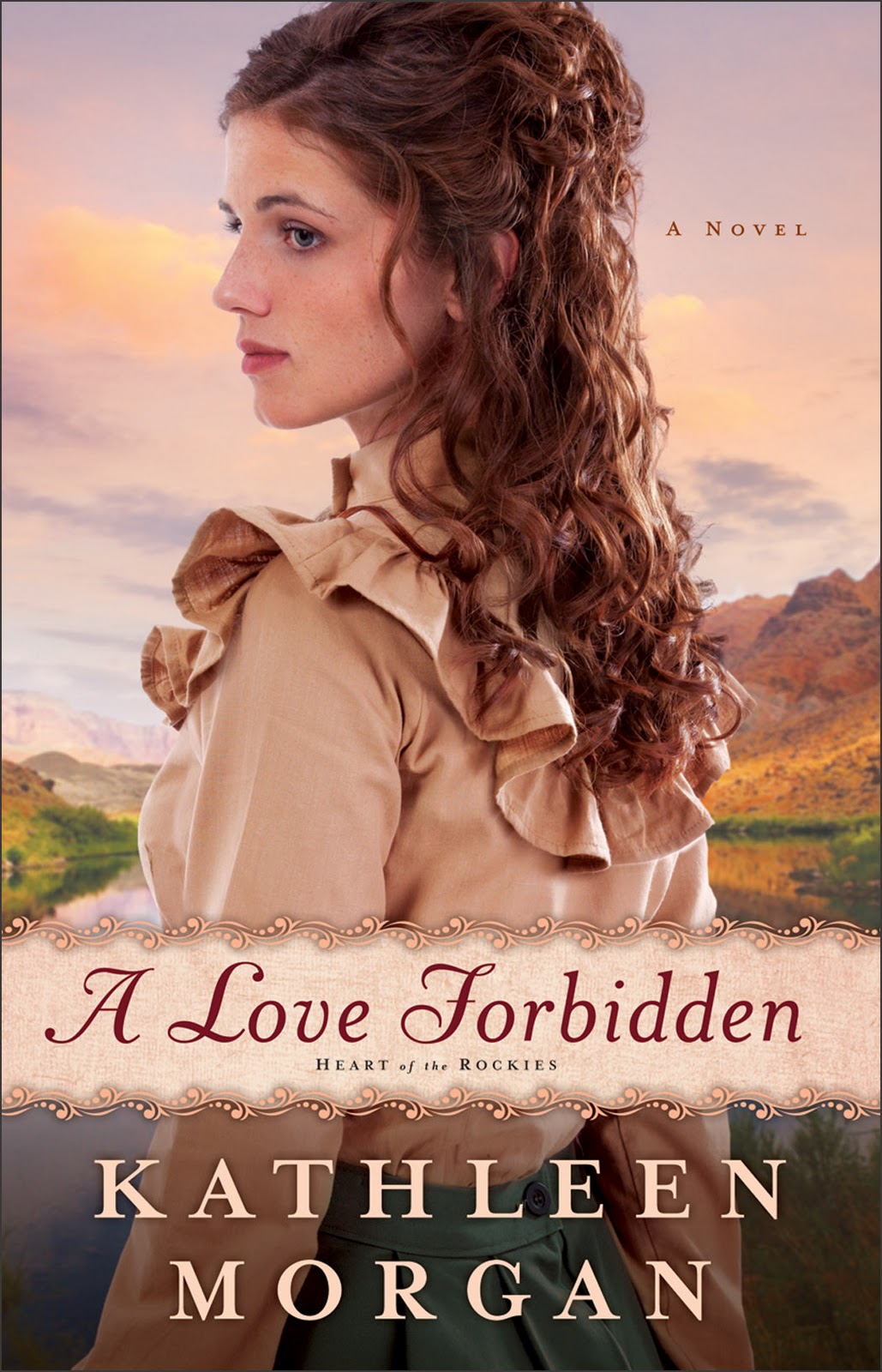
A Love Forbidden by Kathleen Morgan

Moved by the desire for adventure and a yearning to help the Ute Indians, twenty-year-old Shiloh Wainright impulsively accepts a teaching position at the White River Indian Agency in northwestern Colorado. The new job, however, isn't what she imagined it would be, and Shiloh soon finds herself caught in the cross fire between the Utes, their unyielding Indian Agent, and the unrealistic demands of the US government. Her unexpected encounter with Jesse Blackwater, an embittered half-breed Ute and childhood friend, only complicates matters as they battle their growing feelings for each other amidst the spiraling tensions threatening to explode into a catastrophic Indian uprising.

Set amongst the wilds of the Colorado Rockies in 1879, this is a tale of a forbidden love and a faith tested in the cauldron of intolerance and the harsh realities of life on the untamed frontier. Bestselling author Kathleen Morgan deftly explores themes of mercy, fidelity to one's beliefs despite what others think or do, and compassion for those different from oneself as she plumbs the depths of the human heart and the healing power of God's love.

May, 2012


Waiting for Sunrise by Eva Marie Everson

Life sometimes gets the best of us. For some it's the daily pressures, for others it's the shadows of the past. For Patsy Milstrap, it's both. When she travels to beautiful Cedar Key on Florida's Gulf Coast in search of healing, she never dreams her past will be waiting for her there.

With a large helping of Southern charm, Waiting for Sunrise is a touching story of family, young love, and the need for forgiveness. Author Eva Marie Everson expertly draws out the bittersweet moments of life, weaving them into a tale that envelops the soul.

June, 2012


Mary Magdalene by Diana Wallis Taylor

Long maligned as a prostitute or a woman of questionable reputation, Mary Magdalene's murky story seems lost to the sands of time. Now a portrait of this enigmatic woman comes to life in the hands of an imaginative master storyteller. Diana Wallis Taylor's Mary is a woman devastated by circumstances beyond her control and plagued with terrifying dreams--until she has a life-changing confrontation with the Savior.

Lovers of historical and biblical fiction will find this creative telling of Mary's story utterly original and respectful as it opens their eyes to the redeeming work of Christ in the lives of those who follow him.

June, 2012


The Director's Cut by Janice Thompson

Tia Morales is used to calling the shots. She's the director of the popular sitcom Stars Collide, and her life on set is calculated and orderly. Well, most of the time. But her life outside the studio is another matter. If only she could get her family to behave as well as her stars do! When she starts butting heads with handsome camera operator Jason Harris, it's enough to send a girl over the edge. Will she ever learn to let go and take life--and love--as it comes?

Full of the humor and crazy family dynamics Janice Thompson fans have come to love, this colorful story gives readers an inside look at Hollywood and a healthy dose of romance.

June, 2012


Joy Takes Flight by Bonnie Leon

Kate Evans and Paul Anderson are finally married, settling in, and starting a family. They rejoice when Kate finds she is pregnant, but soon it is clear that there are hurdles ahead. Should she continue in her dangerous profession as an Alaskan bush pilot? Can she really fall into the role of a wife? Then tragedy strikes, life begins to unravel, and Kate fears she may have lost Paul for good.

Chock-full of high-flying adventure, romance, and the drama of life, Joy Takes Flight is the exciting conclusion to Bonnie Leon's Alaskan Skies series.

July, 2012


The Gifted by Ann Gabhart

By 1849, Jessamine Brady has been in the Shaker Village for half her life, but in spite of how she loves her sisters there, she struggles to conform to the strict rules. Instead she entertains dreams of the world outside. When Tristan Cooper seems to step out of those dreams to entice her into the forbidden realm beyond the Shaker Village, her life turns upside down. Will Jessamine be able to survive the storms of the world? Or will she retreat back to the peace of Harmony Hill?

The thousands of loyal fans of Gabhart's Shaker novels will love this entrancing story of learning to trust the gifts God gives us and let him guide us through life.

July, 2012


Lethal Legacy by Irene Hannon

The police say her father's death was suicide. But Kelly Warren says it was murder--and she has new evidence that she believes proves it. Detective Cole Taylor doesn't put much credence in her claim, and nothing in his case review suggests foul play. But when Kelly ends up in the emergency room with a suspicious life-threatening medical condition, the incident strikes him as more than just coincidence. Digging deeper, he discovers she's linked to a long-ago crime. Is history repeating itself? And who wants Kelly silenced?

With her trademark high-intensity action and taut suspense, Irene Hannon closes out her Guardians of Justice series with a story of old grudges and budding romance that is sure to increase her substantial fan base.

August, 2012


The Haven by Suzanne Woods Fisher

When Sadie Lapp steps off the bus in Stoney Ridge after being in Ohio for the winter, she is faced with a decision--one that goes against her very essence. Yet it's the only way she can think of to protect a loved one.

Schoolteacher Gideon Smucker has been crazy about Sadie since boyhood. But his response to her surprising decision undermines his own reputation--and his relationship with Sadie.

College student Will Stoltz is spending the spring at the Lapp farm as a guard for a pair of nesting Peregrine Falcons--courtesy of the Lancaster County Game Warden. Will needs to get his life back on track, but his growing friendship with Sadie threatens his plans.

The lives of these three individuals intertwine, and then unravel as unexpected twists create ripples through the town of Stoney Ridge . . . and through Sadie's heart.

August, 2012


Dying to Read by Lorena McCourtney

Cate Kincaid is just dipping her toe into the world of private investigating until one of the many résumés she has floating around lands her a real job. All she has to do is determine that a particular woman lives at a particular address. Simple, right? When the big and brooding house happens to contain a dead body, this routine PI job turns out to be anything but simple. Is Cate in over her head?

Readers will be hooked from the very first chapter of this fast-paced and witty romantic mystery from bestselling and award-winning author Lorena McCourtney.

August, 2012

Related Posts Plugin for WordPress, Blogger...